Friday, January 30, 2015
Wednesday, January 28, 2015
Women's Rights in Saudi Arabia
"And for women are rights over men similar to those of men over women." [Noble Qur'an 2:228]
Women's rights in Saudi Arabia are quite limited as compared to many of its neighbors. Saudi Arabia is viewed by the rest of the world as the leader of the oil industry and the land of many kings. Although over the years, Saudi Arabia has made significant leaps in the matter of women's rights, there is still a long way to go. Previous Global Gender Gap Reports showed countries such as Kyrgyzstan, Gambia and Indonesia significantly higher than Saudi Arabia for women's equality. As much fame and fortune as the country has, they still have a long way to go in terms of gaining equal rights for women.
Even today in Saudi Arabia, laws prohibit women from traveling, getting medical care, and conducting business, let alone dressing as they wish, without the approval of a male relative. If a women is seen breaking any of these laws, the religious police or the Mutaween, will enforce Sharia Law by detaining or beating the miscreants.
In Saudi Arabia, all women are required "to draw their outer garments around them (when they go out or are among men)" or wear hijab. Hijab literally means a "screen," or "curtain," and in most Middle Eastern countries refers to a veil that covers the head and chest. It is often worn by Muslim women as a symbol of modesty and privacy.
In public, whether at a mosk or a restaurant, women and men are required to sit separately from one another. This ensures that women do not come in contact with strange men, the family honor is maintained and the female's purity is kept. The majority of Saudi homes, believe it or not, have two entrances- one for men and one for women. These special doors or sections are called harim, which directly translates to "forbidden," or "sacred." Violation of any sex-segregation rules is referred to as "khalwa."
One weak aspect of Saudi Arabia when looking through the lens of women's rights, is employment. Only 18.6% of the native working force and 6.1% of foreign expatriate workers are women. In Saudi Arabia, a women's work "must be deemed suitable for female physique and mentality."
According to the Saudi Labor Minister, "The [Labor] Ministry is not acting to [promote] women's employment since the best place for a woman to serve is in her own home. ... therefore no woman will be employed without the explicit consent of her guardian. We will also make sure that the [woman's] job will not interfere with her work at home with her family, or with her eternal duty of raising her children..."
The percentage of women with a proper education has jumped in the last 45 years or so. In the 1970's, a mere 2% of women were literate as compared to 15% of men. Now, 81% of women in Saudi Arabia have the ability to read and write.
"The Saudi leadership is working hard on reform and supporting women ... Seventy years ago we were completely isolated from the world. The changes which are taking place are unmistakable, and we have finally started opening up." Women are slowly gaining rights as they are beginning to stand up for themselves. Although Saudi Arabia has made huge leaps towards gender equality, they still have a long way to go.
Women's rights in Saudi Arabia are quite limited as compared to many of its neighbors. Saudi Arabia is viewed by the rest of the world as the leader of the oil industry and the land of many kings. Although over the years, Saudi Arabia has made significant leaps in the matter of women's rights, there is still a long way to go. Previous Global Gender Gap Reports showed countries such as Kyrgyzstan, Gambia and Indonesia significantly higher than Saudi Arabia for women's equality. As much fame and fortune as the country has, they still have a long way to go in terms of gaining equal rights for women.
Even today in Saudi Arabia, laws prohibit women from traveling, getting medical care, and conducting business, let alone dressing as they wish, without the approval of a male relative. If a women is seen breaking any of these laws, the religious police or the Mutaween, will enforce Sharia Law by detaining or beating the miscreants.
In Saudi Arabia, all women are required "to draw their outer garments around them (when they go out or are among men)" or wear hijab. Hijab literally means a "screen," or "curtain," and in most Middle Eastern countries refers to a veil that covers the head and chest. It is often worn by Muslim women as a symbol of modesty and privacy.
In public, whether at a mosk or a restaurant, women and men are required to sit separately from one another. This ensures that women do not come in contact with strange men, the family honor is maintained and the female's purity is kept. The majority of Saudi homes, believe it or not, have two entrances- one for men and one for women. These special doors or sections are called harim, which directly translates to "forbidden," or "sacred." Violation of any sex-segregation rules is referred to as "khalwa."
One weak aspect of Saudi Arabia when looking through the lens of women's rights, is employment. Only 18.6% of the native working force and 6.1% of foreign expatriate workers are women. In Saudi Arabia, a women's work "must be deemed suitable for female physique and mentality."
According to the Saudi Labor Minister, "The [Labor] Ministry is not acting to [promote] women's employment since the best place for a woman to serve is in her own home. ... therefore no woman will be employed without the explicit consent of her guardian. We will also make sure that the [woman's] job will not interfere with her work at home with her family, or with her eternal duty of raising her children..."
The percentage of women with a proper education has jumped in the last 45 years or so. In the 1970's, a mere 2% of women were literate as compared to 15% of men. Now, 81% of women in Saudi Arabia have the ability to read and write.
"The Saudi leadership is working hard on reform and supporting women ... Seventy years ago we were completely isolated from the world. The changes which are taking place are unmistakable, and we have finally started opening up." Women are slowly gaining rights as they are beginning to stand up for themselves. Although Saudi Arabia has made huge leaps towards gender equality, they still have a long way to go.
| http://www.fashion-today.co.uk/wp-content/uploads/2013/07/119.jpg |
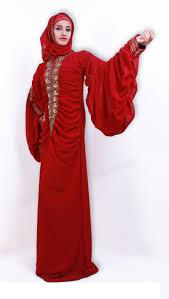
| Add captihttp://nationtrendz.com/wp-content/uploads/2014/02/red-abaya-women-wear-collection-2014.jpgon |
Friday, January 23, 2015
Comparison of Women's Rights in Various Countries in the Middle East
Being young girls living in the United States, the land of the free and the home of the brave, we scarcely ever have our rights contravened. Besides the occasional comment about boys being stronger, smarter or faster, women are treated equally as compared to men. Women have worked strenuously for centuries to earn the right to vote, to drive, and to have equal rights. Unfortunately, in many Middle Eastern countries, this is hardly the case.
In many parts of the Middle East, women are treated quite unfairly. They have very little say in what they wear, who they marry, and even who they interact with. According to the original Qur'an, men and women are equals. Somehow, in countries in which the Qur'an dictates every move a person makes, women have hardly any rights as compared to men and the inequality between men and women is astonishing.
Below, is a chart comparing women's rights in various countries in the Middle East.
In many parts of the Middle East, women are treated quite unfairly. They have very little say in what they wear, who they marry, and even who they interact with. According to the original Qur'an, men and women are equals. Somehow, in countries in which the Qur'an dictates every move a person makes, women have hardly any rights as compared to men and the inequality between men and women is astonishing.
Below, is a chart comparing women's rights in various countries in the Middle East.
Tuesday, January 20, 2015
Impressions of Women's Rights in the Middle East
"They made me invisible, shrouded and non-being
A shadow, no existence, made silent and unseeing
Denied of freedom, confined to my cage
Tell me how to handle my anger and my rage?"
-- Zieba Shorish-Shamley, "Look into my World" published on the 50th anniversary of the United Nations Universal Declaration of Human Rights, Courtesy of U.S.Department of State (Diplomacy in Action)
After briefly learning about the constraints put on women we decided to join the fight for equal rights by first spreading the awareness to others about the struggles faced by women in other countries.
Our goal through these blog posts is to analyze the situations of women around the world and compare the circumstances, as well as reach out the others and find ways to bring people into the fight for equal rights amongst genders.
We know that the small actions add up and we are trying to learn more about the conditions women face in countries where they are deemed incapable and unqualified.
Labels:
gender inequality,
middle east,
rights,
Women,
women's rights
Subscribe to:
Comments (Atom)